Source-linked records
Claims retain their source, attribution and qualifications. Review helps inspect the record; it does not establish truth.
Under active development · AI tools for political and policy analysis.
Development status →Context Capsules / The knowledge format
A Context Capsule is designed to package sources, claims, relationships, time and analytical methods. The aim is to carry a usable record into the next question, workspace or AI tool.
PRAXIS supports document-to-capsule review and reuse in chat. Reference bundles include additional graph structures. Full lossless interchange remains in development.
What travels together
The ontology defines a proposal, a condition or a decision. The graph connects them. The capsule is designed to preserve those connections alongside source references and review state.
An ontology gives each record a meaning. The graph connects the proposal to its source, author, conditions and review.
Select a record to follow its connections. Small screen? Scroll the graph.
A proposal is distinct from an adopted policy. Funding and approval remain unresolved in this example.
One structure · four types
Four ways to organize the context a task needs. Download the illustrative JSON files to inspect the proposed format. Support for the full design is still in development.
Who you work as: role, mandate, audience, voice, standing positions.
Built from: A conversation plus your past documents.
example .jsonWhat is going on: actors, claims, events, contradictions, episodes.
Built from: Your documents, feeds, and a guided interview.
example .jsonHow an expert thinks: methods, heuristics, traps, checklists, devices.
Built from: An expert-elicitation interview.
example .jsonA reviewed work product: audience, sources, provenance, version and caveats.
Built from: A reviewed deliverable and its source and review record.
example .jsonThe proposed anatomy · nine layers
Authored context landscape
A fictional reporting-rule assignment within 640 authored synthetic records and eight dossiers. The fixture download preserves the same passages, relationships, snapshots and capsule membership. Illustration size is not product scale.
Authored context landscape / fictional
Example Advisory is following a reporting-rule consultation. Inspect a proposal, the passage behind it and what changes on Day 15. Illustration size is not product scale.
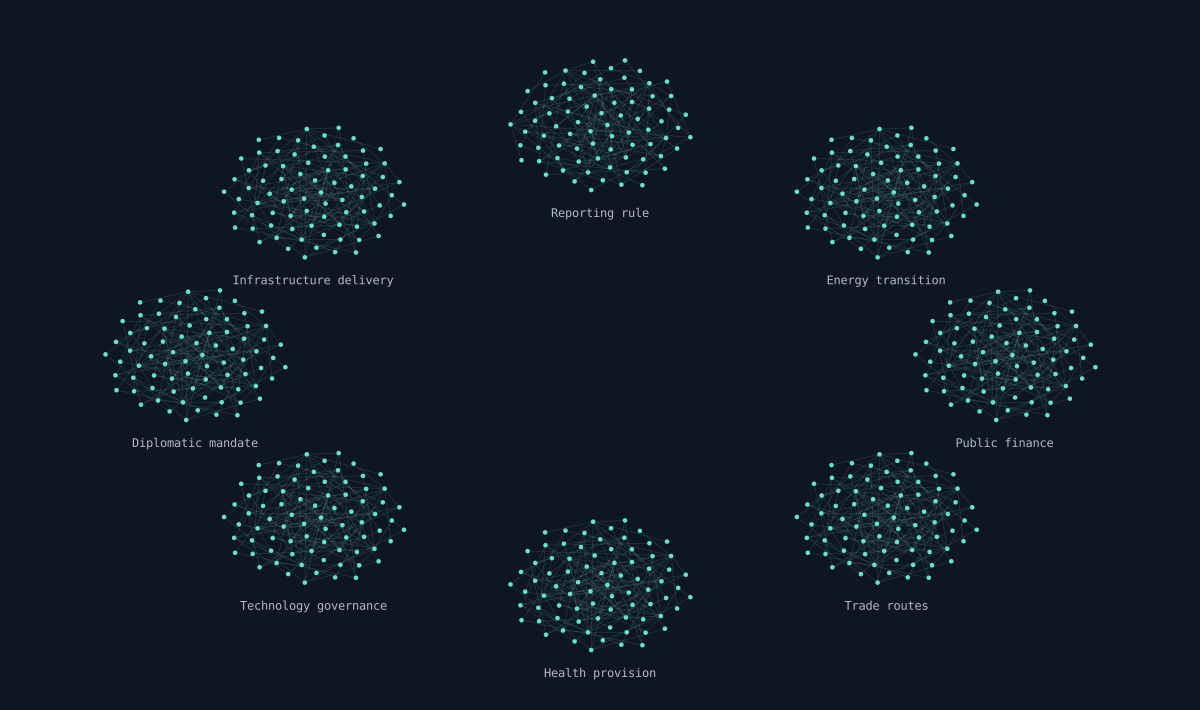
Static overview. Interactive search and inspection load with JavaScript. Read the complete authored fixture.
Inside the idea · interactive architecture explainer
Think of a Context Capsule as a small, versioned knowledge database: several connected layers that a person can inspect and a compatible agent can query. These six views explain the design; they are not a claim that every layer is fully implemented in PRAXIS.
Evidence layer
Documents, excerpts, source dates, permissions, and provenance. A claim should lead back to the material that supports it. A citation is inspectable evidence, not a guarantee that the claim is true.
Document → paragraph → claim · source access stays explicit
Portability is a development target. PRAXIS export/import currently needs work to preserve document and workspace references. A reference capsule demonstrates a format; it does not establish cross-tool compatibility or source-sharing permission.
Reference artifacts
Four engine-compiled examples. Open their JSON, manifests and sections, or download a bundle.
loading example…
Reference formats do not establish four complete PRAXIS authoring paths. Historical asset redistribution terms are unconfirmed; ask before redistribution. Scenario rights fields do not license the downloaded file. Use and licensing.
Under the hood
Claims retain their source, attribution and qualifications. Review helps inspect the record; it does not establish truth.
Reference artifacts explore JSON-LD and an embedded read-only graph projection. PRAXIS exports have different capabilities.
Keep the questions an analyst asks, the evidence still needed and the decisions a reviewer made.
DIALECTICA is the Rust knowledge-engine development behind the format. Signing and full revision/diff workflows remain roadmap items.
Use the context
Upload documents, review proposed context and attach a saved capsule to your question. Shared discovery through a Capsule Registry remains a proposal.